What makes our flowers sustainable?
Well, it starts with the soil. Part of regenerative farming focuses on looking after the soil. This doesn’t just mean the brown stuff in between my fingers whilst I plant my new Phlox plants, it’s about the life in this soil, including fungi and micro-organisms. This is what makes soil healthy and is the reason we have chosen to invest heavily this year in creating no-dig beds.
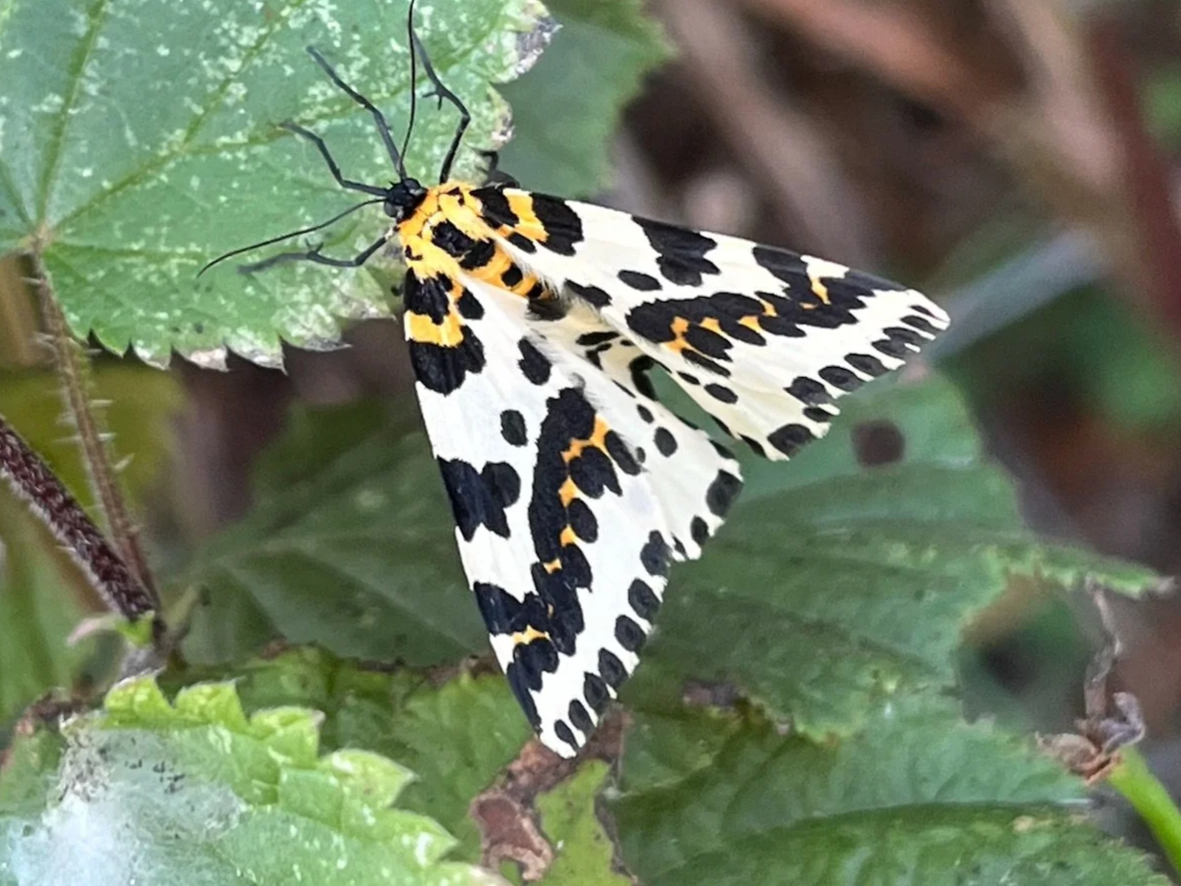
Magpie moth in the hedgerow
No-dig beds are created by mulching the surface of the ground with organic matter. We have chosen to do this at first by laying plain, brown cardboard on the grass, soaking it and then applying a three inch mulch of compost. The compost and cardboard will block out the light and eventually kill off the grass underneath. We can then plant straight into the beds. As we progress, we will top up these no-dig beds with our own compost in future years. It is our intention that any organic matter (stems, grass, branches) from the farm stay on the farm to create compost or dead headging and log piles.
No-dig beds are great because they feed the organisms already living in the soil, replenish soil fertility, help to improve soil structure (leading to less waterlogging) and store more carbon. Every time soil is distrubed or dug, carbon is released into the atmosphere. By digging only minimally, when absolutely necessary, we are avoiding this.
As well as growing our flowers and foliage in no-dig beds, we capture rain water. We are off grid, which means we do not have access to electricity or mains water.
This makes us think more about what resources we are using and reduces our carbon footprint. Last summer we constructed a roof from which we collect rain water into two 1000l IBC tanks. We are planning on increasing the number of tanks we have this year. Plants much prefer rain water to mains water and so this is a win-win situation.
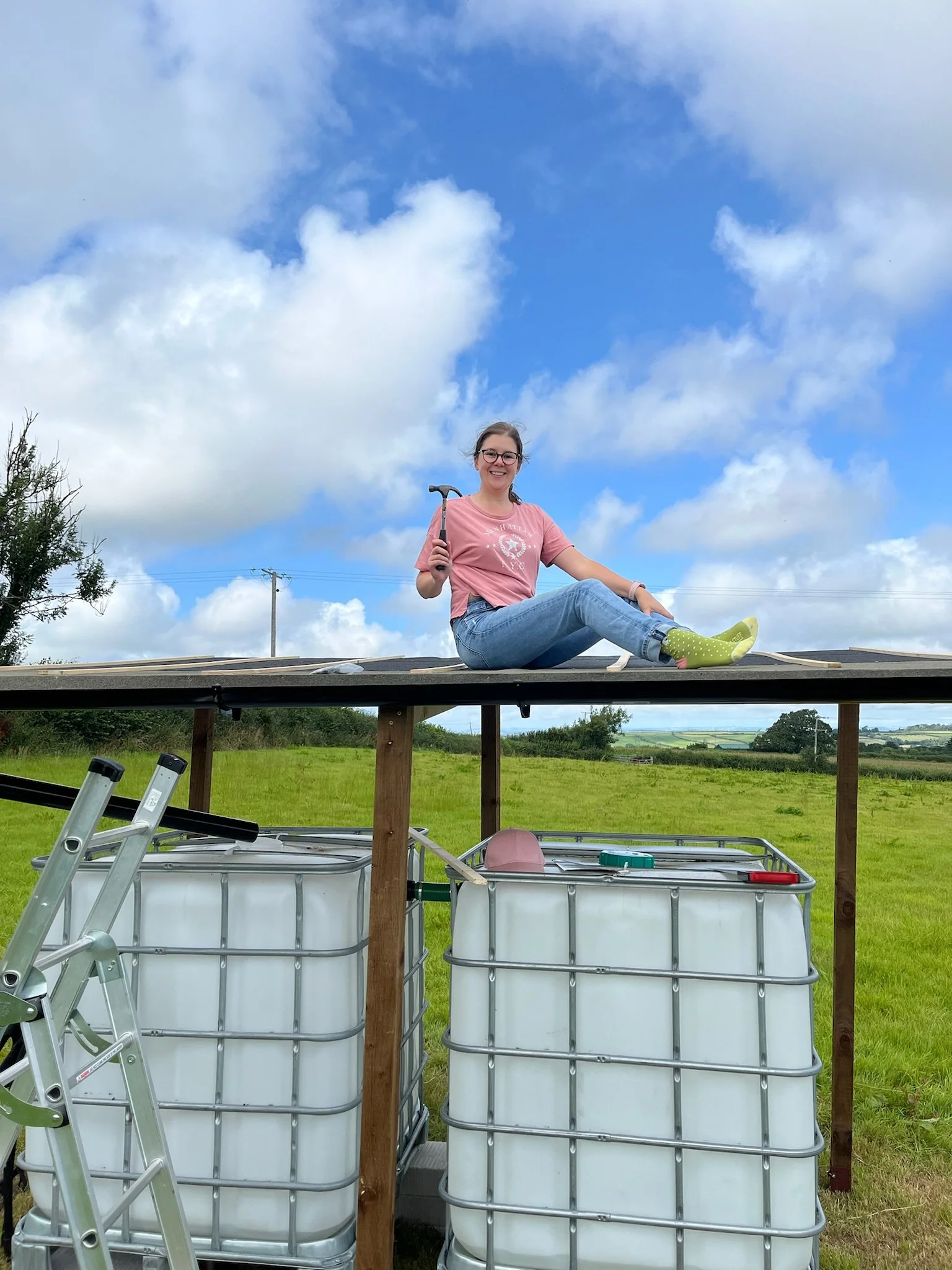
Alice proud of her new water capture area
Finally, we grow our flowers and foliage chemical free. We do not use any pesticides, synthetic fertilisers or herbicides. We encourage natural predators including birds, ladybirds and lacewings amongst others. We leave the aphids on the roses because we know they are food for wrens and ladybird larvae. There may be short term caterpillar infestations, but they will disappear when the blue tits feed their young. By growing without chemicals we are protecting the health of the wildife in our area, of our customers (no breathing in nasty chemcials when you sniff our beautifully scented roses, sweet peas and peonies) as well as our own health. This means that we need to grow more than what we can sell because we accept that some of our flowers will be left to nature, but we’re good with that. By supporting us in buying your flowers locally and sustainably you can be sure you too are having a positive impact on your environment.
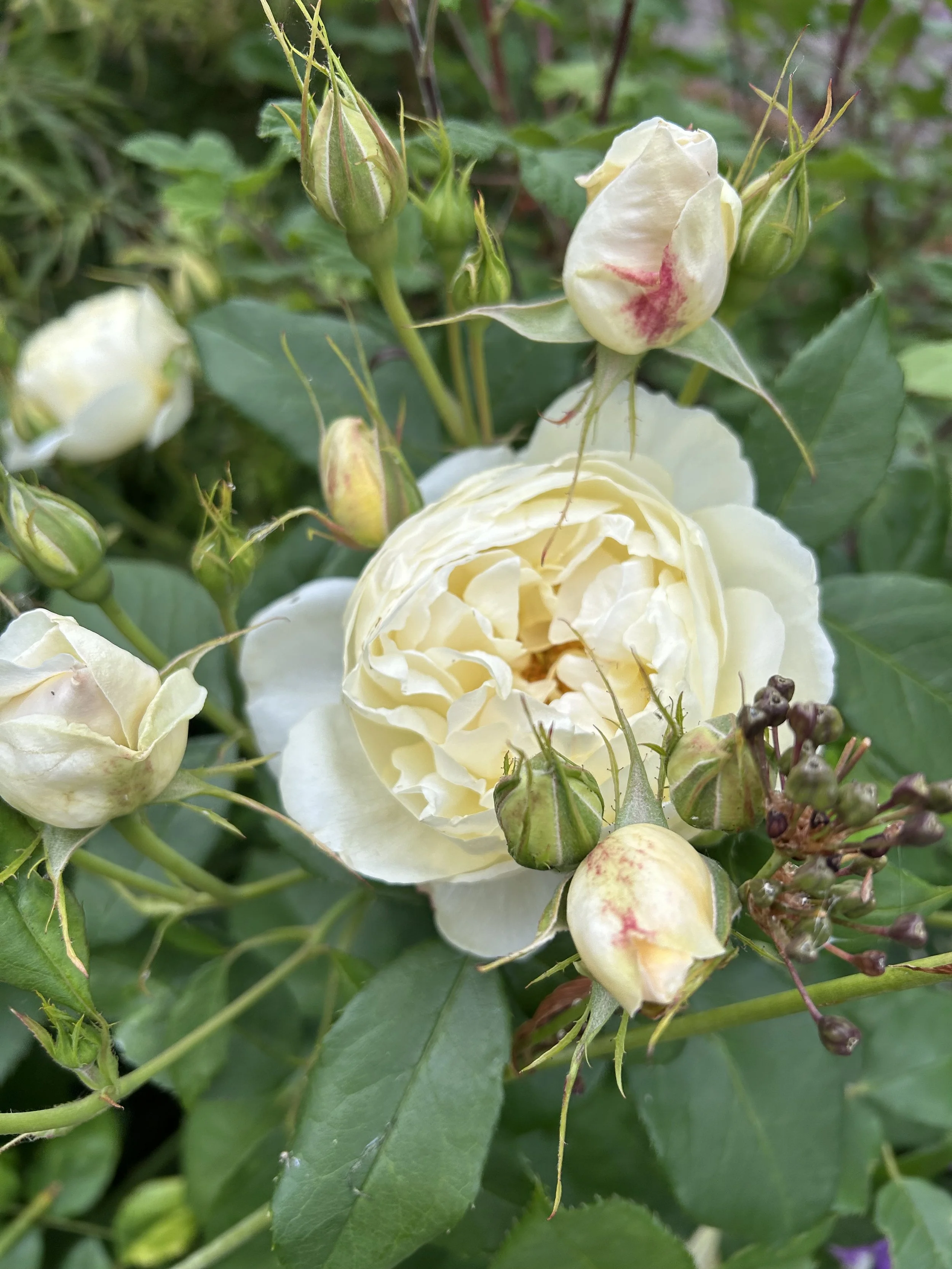
Rose Vanessa Bell