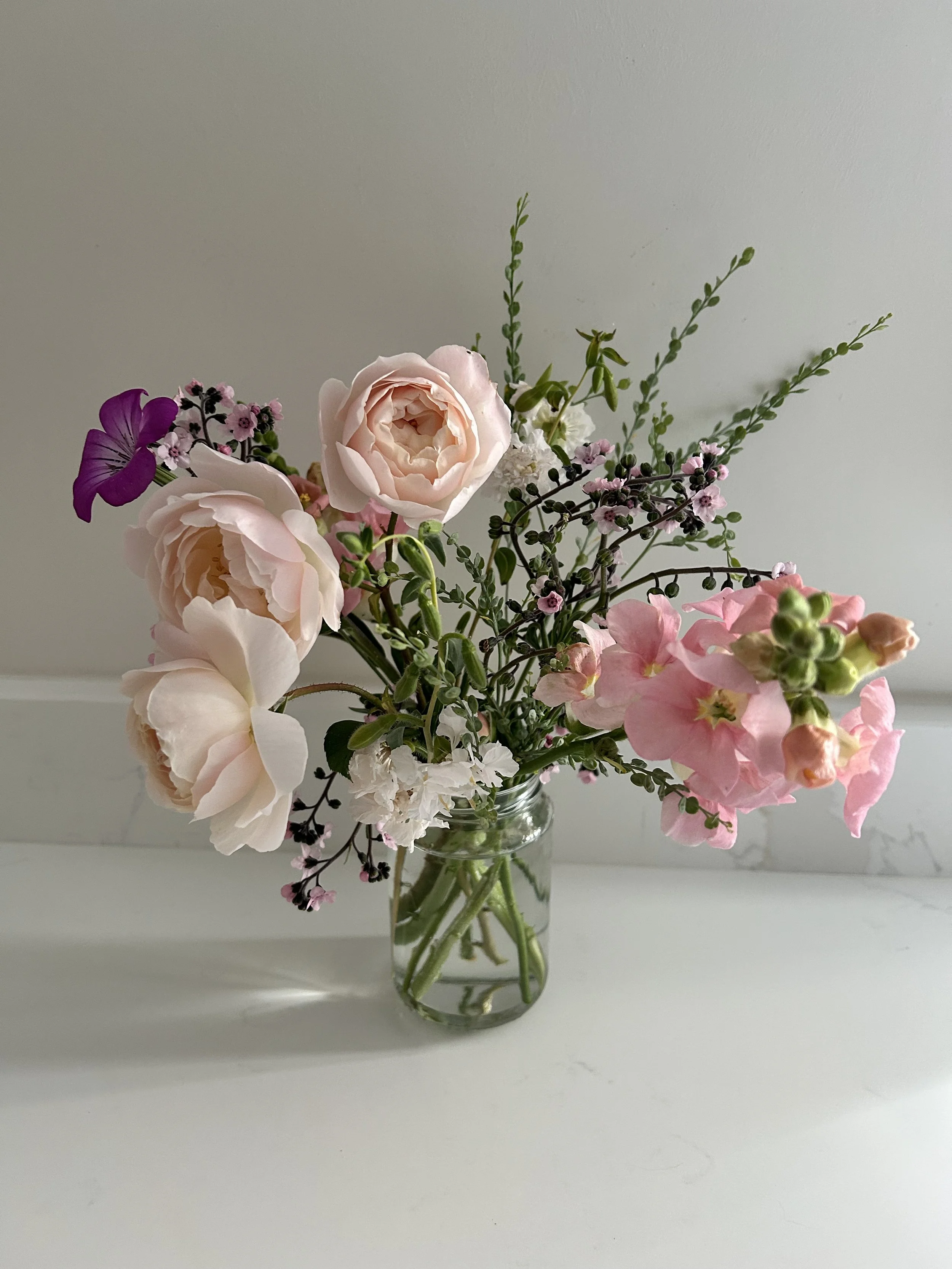
How many stems….?
If you’ve recently become engaged or are planning a special event where flowers will be an essential part then DIY buckets of flowers are a great option which are economical as well as being fun to arrange. The use of jam jars is really popular as they provide the ideal height at a dining table. It is easy to collect a lot of jars quickly and they give a country feel to an event.
You may be wondering “how many buckets do I need to order for the number of jars I want to use?” Well, we have created a handy guide to help you decide. This guide is based on a standard jam jar size (the kind you would find your morning jam in).
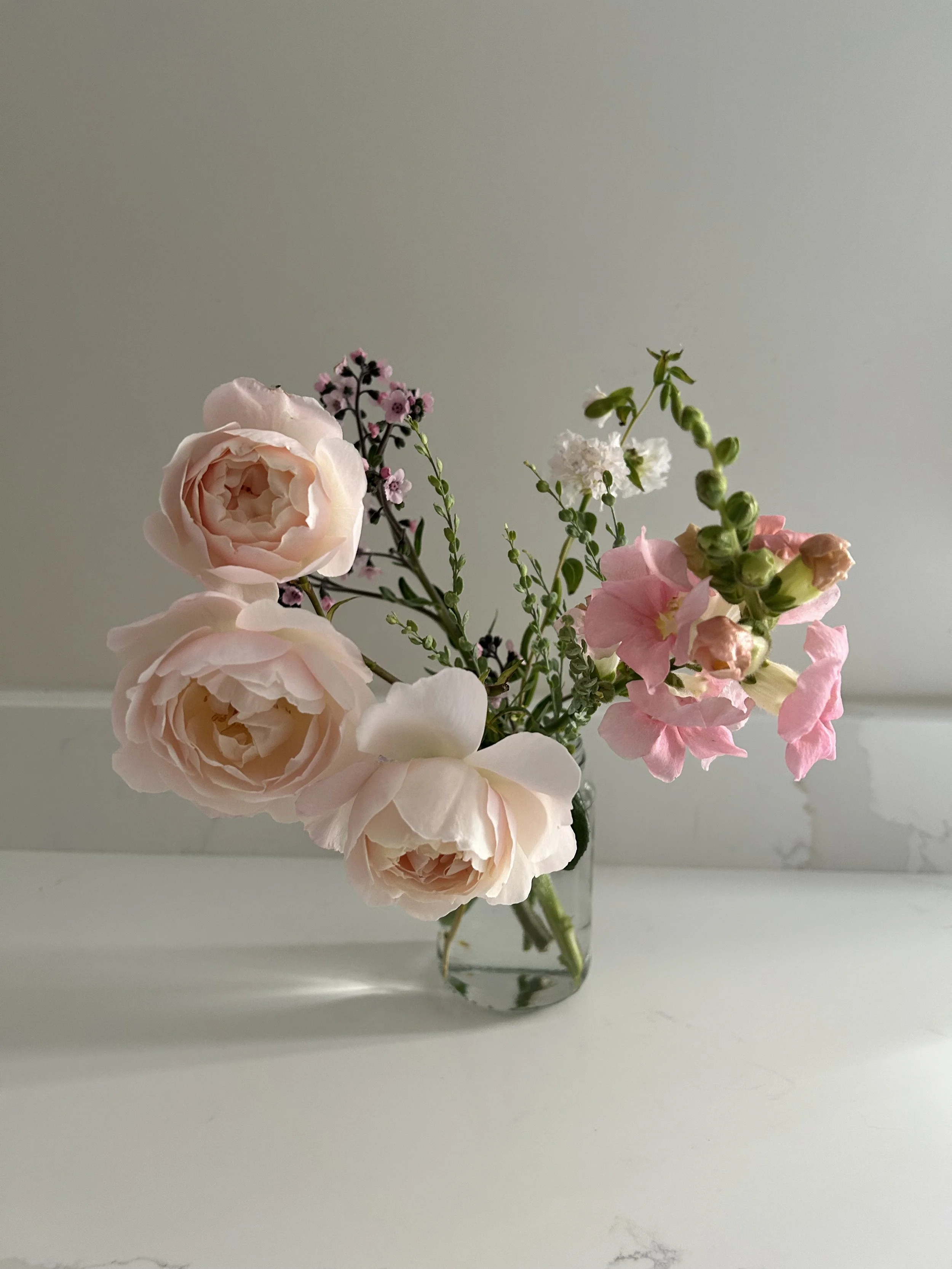
To start we placed five stems of our our highest quality blooms into the jar. As you can see they provide a wild, airy look.
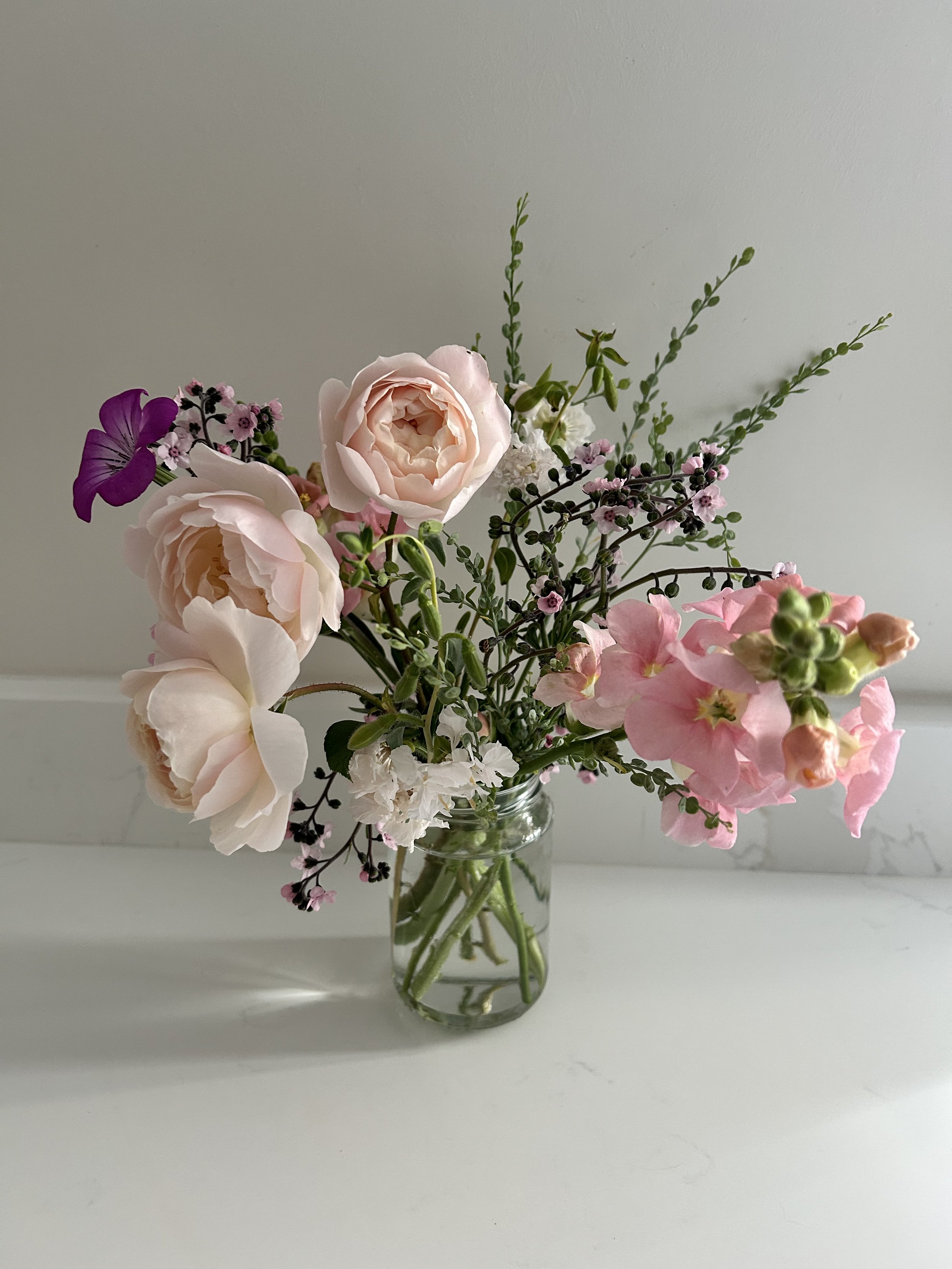
Ten stems provide a fuller look.
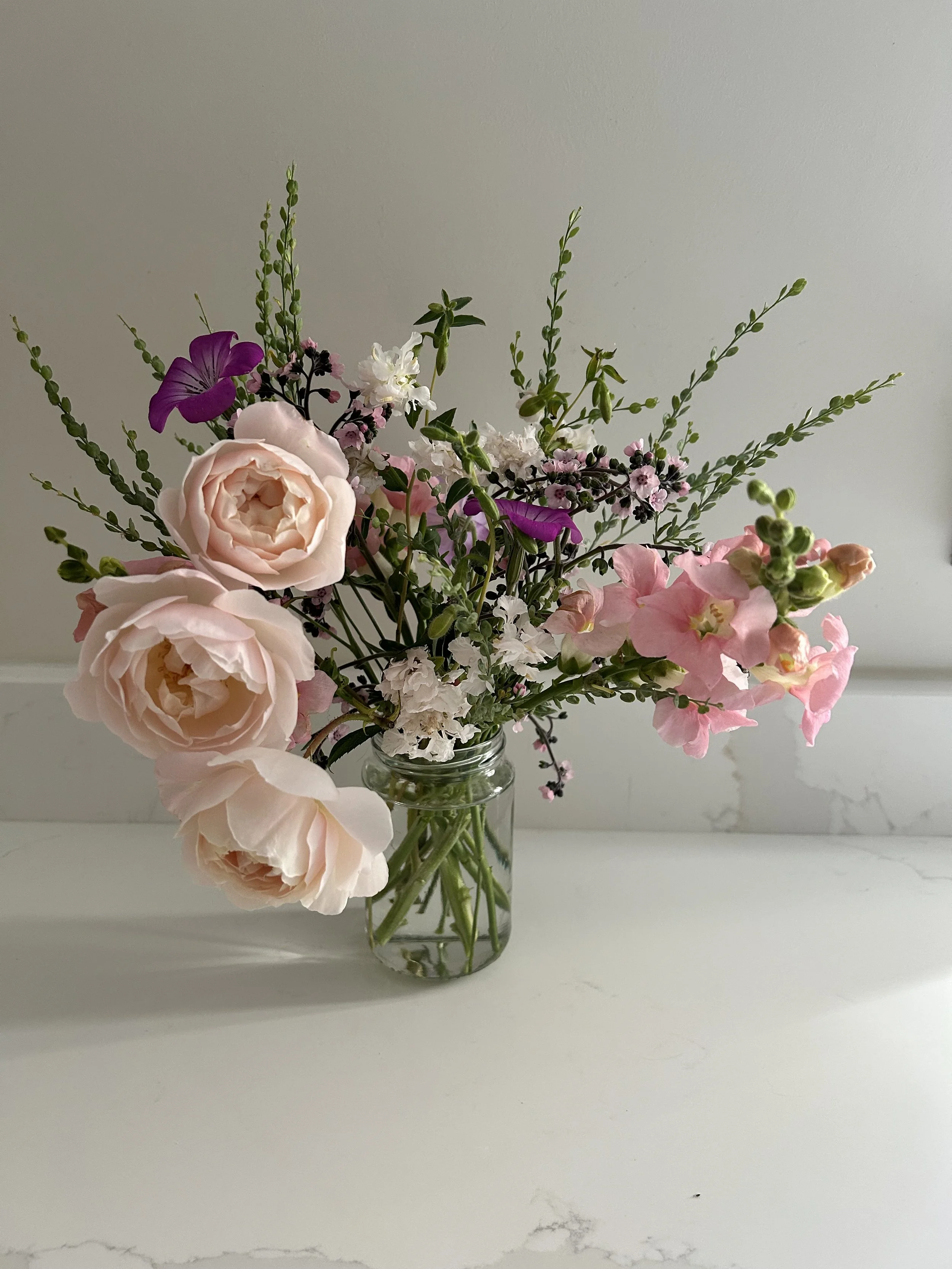
Fifteen stems allow for more movement and colour in the arrangement.
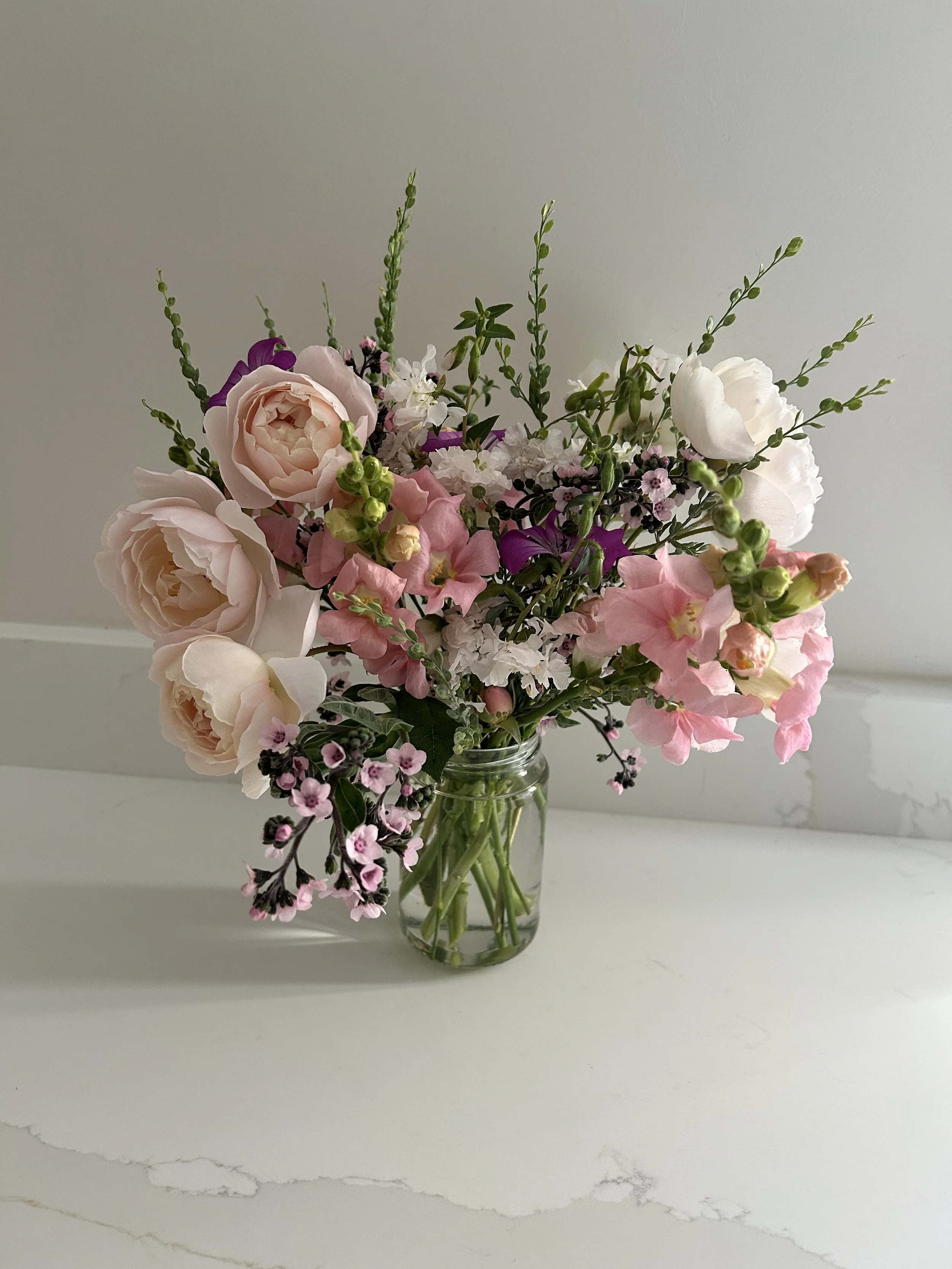
Twenty stems add more interest and a more luxurious feel.
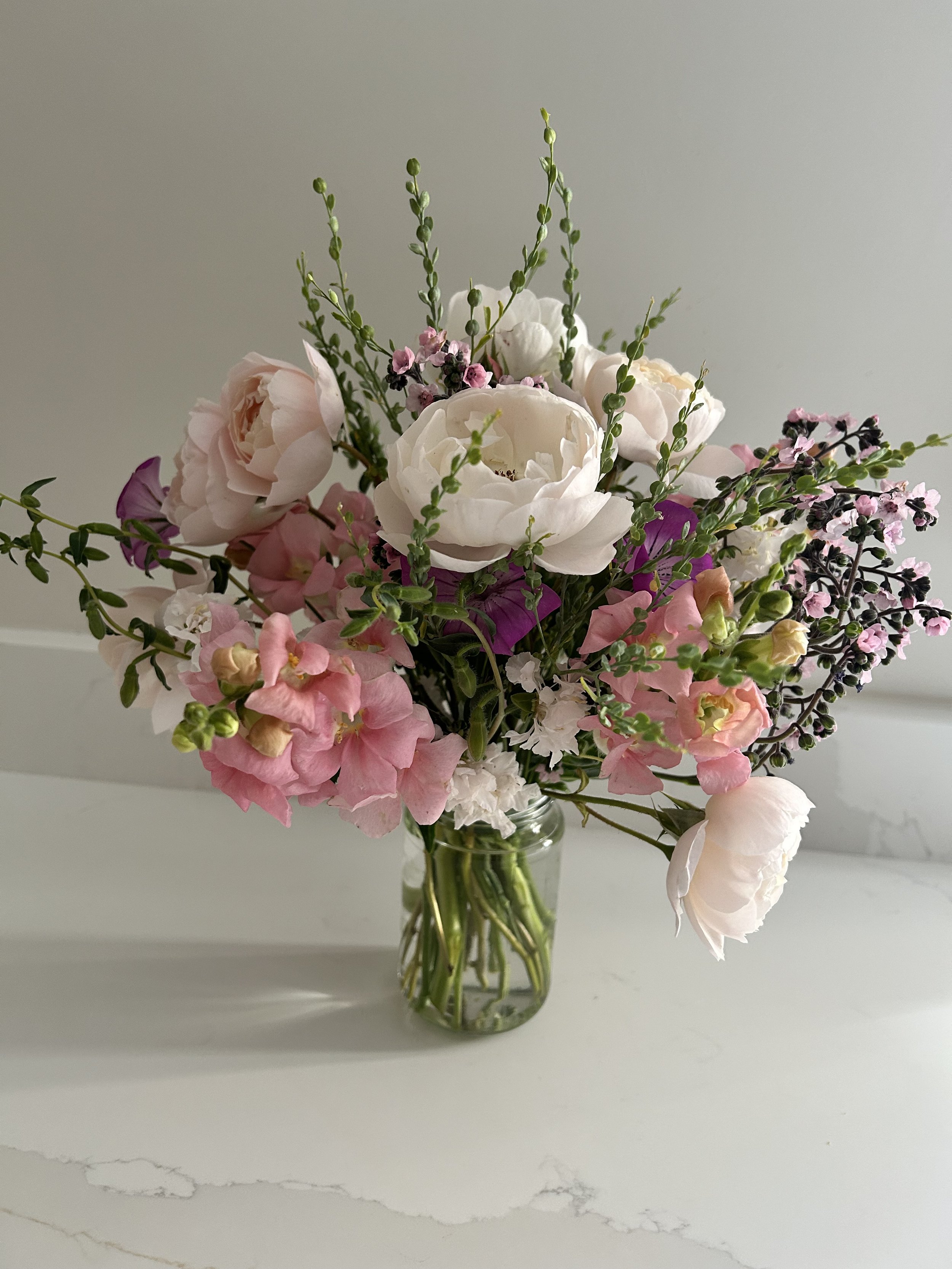
Twenty five stems mean a full arrangement, giving an abundant and deluxe appearance.
When creating jam jar arrangements for a table, it is important to keep the visual balance by ensuring stems are at a height of between double to 1.5 times that of the jar. It is essential to maintain a rounded design that allows space so that you can see your fellow diners.
You can create these at home with friends and family, alternatively we can provide arrangements premade. Get in touch with us for all your flowery needs!
Ephemeral art
Flowers are a luxury. There is no denying it. They are fleeting in their beauty. But boy, are they worth it!
Scientific studies show that having flowers in your house actually make you happier and healthier. They decrease anxiety, reduce stress and boost your mood. But we don’t need convincing, we already knew that.
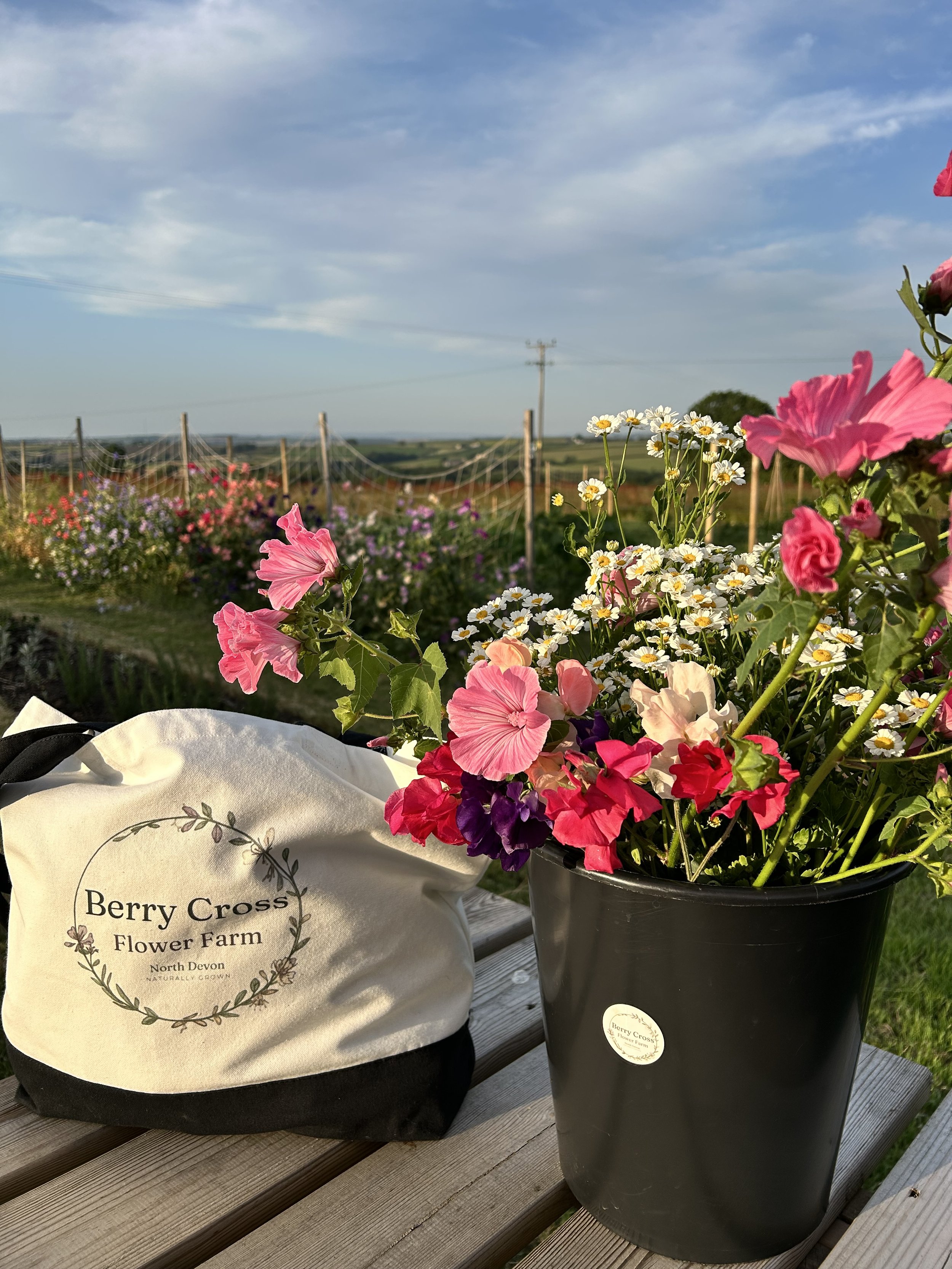
Mixed buckets picked fresh, every evening
Some flowers will last longer than others once cut, but it really depends on a number of things happening in order to maximise their vaselife. Some flowers like sweet peas will last five days if looked after properly. Others, like alstromeria can last weeks in the vase. There are a few things we can do to help flowers live as long as possible in the vase.
The first thing is down to us, the cut flower grower. When we cut your flowers we do so in the coolest part of the day. We never pick when the sun is at the highest point because stems will already be stressed. We cut our flowers very early in the morning (7am!) or late into the evening (7pm). It means they have moisture in their stems already.
Secondly, we cut straight into clean, cool water. No preservatives, flower food or chemicals, as this will eventually end up back in the water system which we don’t want. We make sure our buckets are spotless so that no bacteria can enter the stems and that they are filled with tap water - good enough to drink ourselves. The buckets are then kept in the shade to keep them cool. We make sure we condition our flowers for at least 5-6 hours, but preferably overnight. This means that they have the opportunity to take up a big drink of that clean, fresh water before they arrive with you.
When you pick up your flowers, whether in buckets for arranging yourself or in a gorgeous bouquet, it is important that you recut the stems to open up more drinking cells. It’s best to do this with the sharpest scissors you have to avoid crushing the stems, cutting at a 45 degree angle, which will allow the maxmium surface area for water intake.
Once you’ve arranged your stunning flowers in a vase or container, this should be placed in a shady area of your house, not in full sun. This is because the sun will heat up the water and the flowers and any bacteria in the water will start to multiply quicker.
Every few days it’s a great idea to empty the water, clean the vase and refill with clean, fresh water. Whilst you’re doing this you can recut the stems an inch further up, to open up fresh drinking cells.
The last thing to do is to remove the stems which are past their best, as time goes by. You can snip off individual flowers which have gone over, and pull out stems which no longer look happy. The arrangement will become smaller, but those flowers which are left will have a better chance of living longer.
Doing all of this means you get to enjoy your flowers for longer. That said there is something beautiful about flowers drying slowly, losing their petals as they start to turn into what will become next year’s compost. It reminds us that nothing in permenant and that next week is a new week and fresh flowers await again!
We have customers who follow these instructions and say that they get over two weeks out of their Devon grown, chemical free flowers. They are very happy, and so are we!
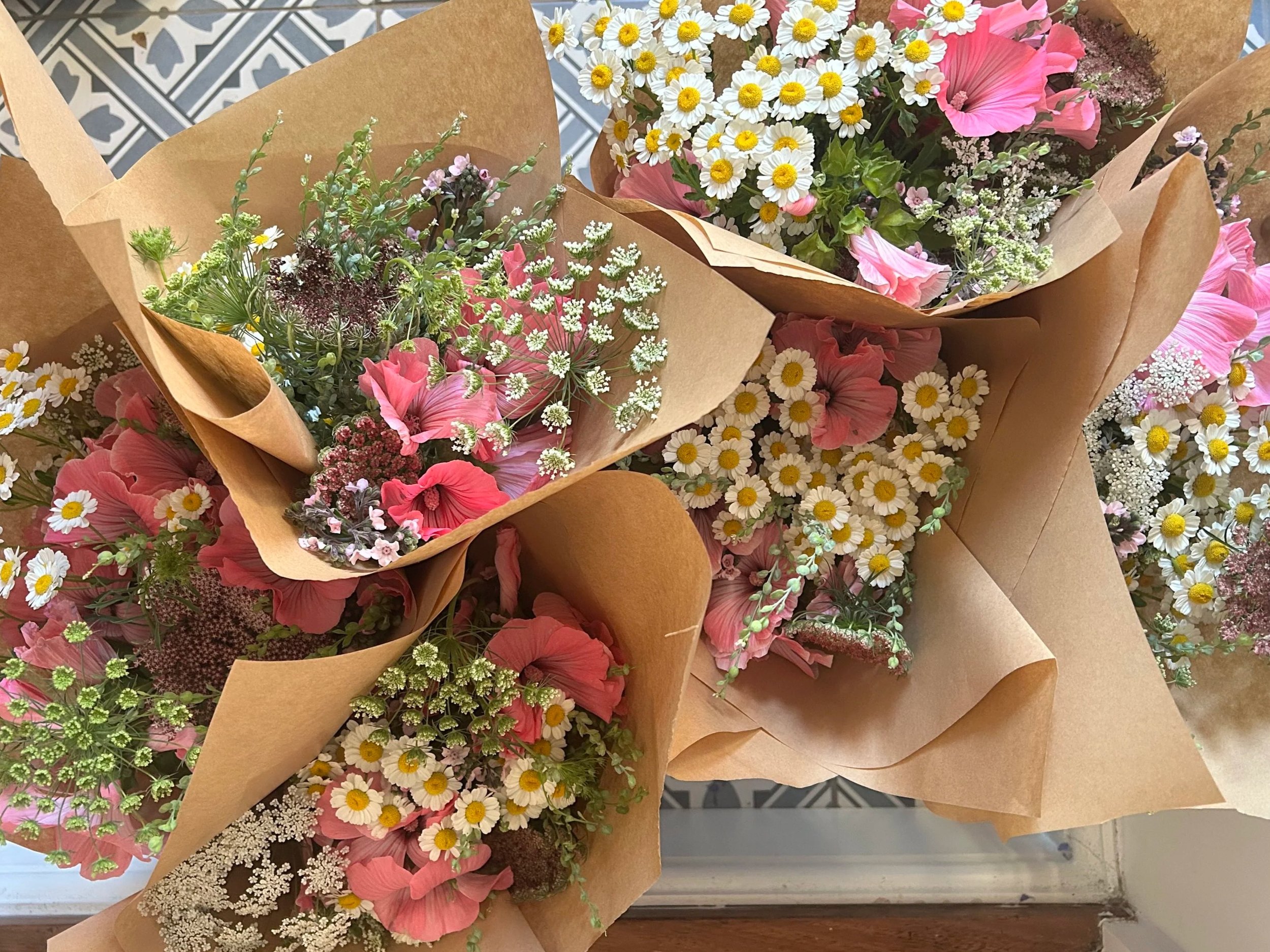
Bouquets to go
Creative Wedding Flowers
Flowers at any event can really make an impact. They add movement, colour and scent. Flowers can be used discretely through the use of bud vases on tables and delicate button holes or provide impact with large urn arrangements and broken arches.
When we sniff flowers they evoke memories and by using flowers with scent at your wedding you help to cement the day in everyone’s memories. In future years when you and your guests detect the scent of that beautiful, sustainably grown rose or get a whiff of the mint which was used to garnish the bride’s bouquet, you will be instantly transported back to your wedding day. Our flowers are grown for scent and natural beauty. We grow a wide range of flowers which have an amazing smell: roses, peonies, sweet peas, sweet rocket, sweet william, as well as herbs like rosemary and mint, and we love using them all in wedding flowers.
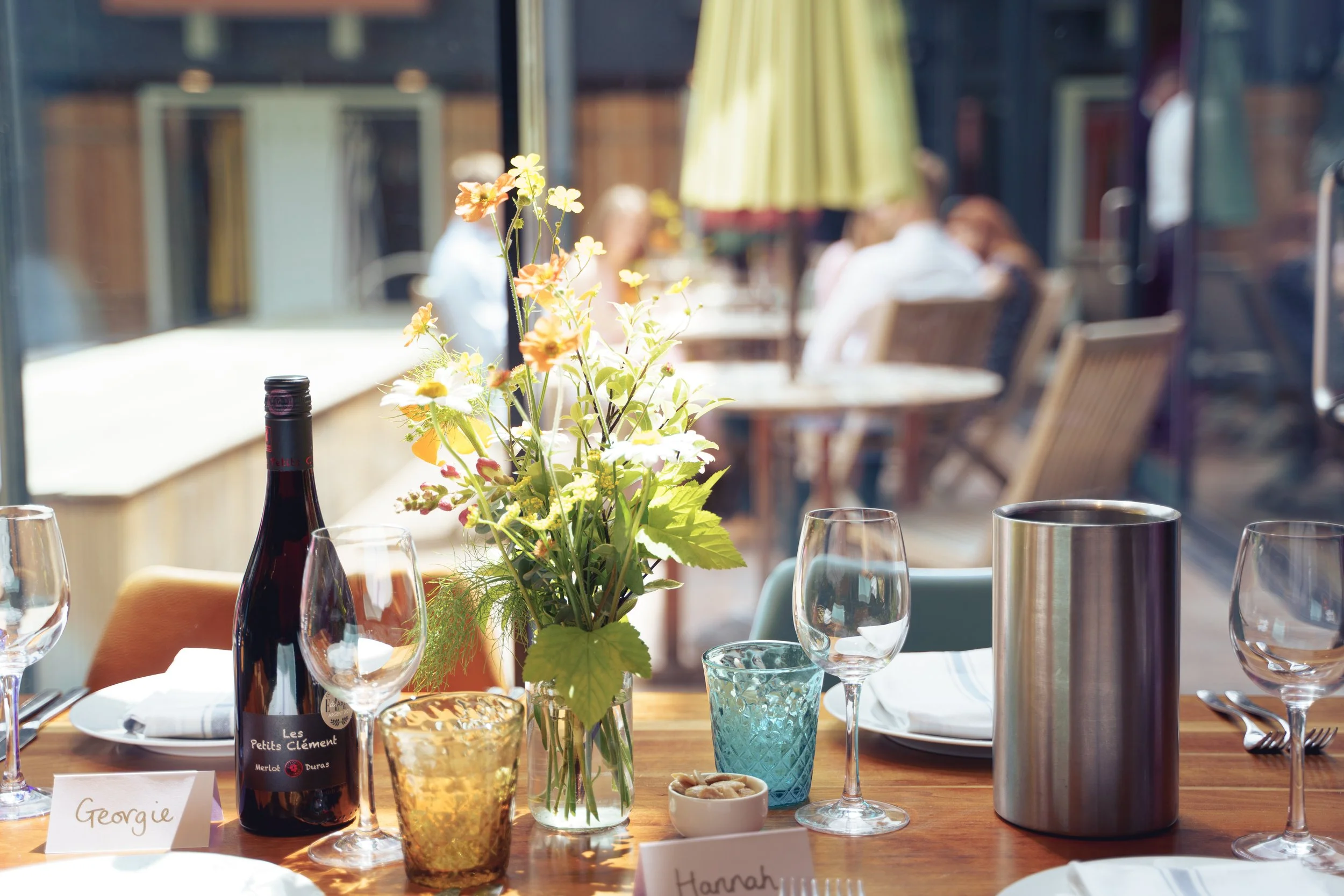
At Berry Cross Flowers we offer a range of options for wedding flowers. For those who prefer a more intimate occassion with smaller areas of flowers then DIY flowers can provide a really affordable option. DIY flowers include buckets of farm fresh, handpicked, best on the day flowers and foliage. They can be curated to tie in with your colour theme and they provide a mindful moment with your loved ones when arranging into your own containers the day before your special day. Bridal bouquets and button holes can be useful additions to DIY wedding flowers, both of which we can supply alongside DIY buckets. If this is something you would like at your wedding, then please get in touch via email or using the form on our website.
For those who want bigger or specifically pre-made arrangements then we can also provide this service for a select number of weddings each year. We can create, install and dismantle arrangements for your wedding. Please get in touch if this is more your vibe.
Whatever option you choose, having flowers at your wedding is really special. Bringing the outside in, or even flowering the outside of a doorway can provide a more natural, relaxing environment on what is an exciting and important day.
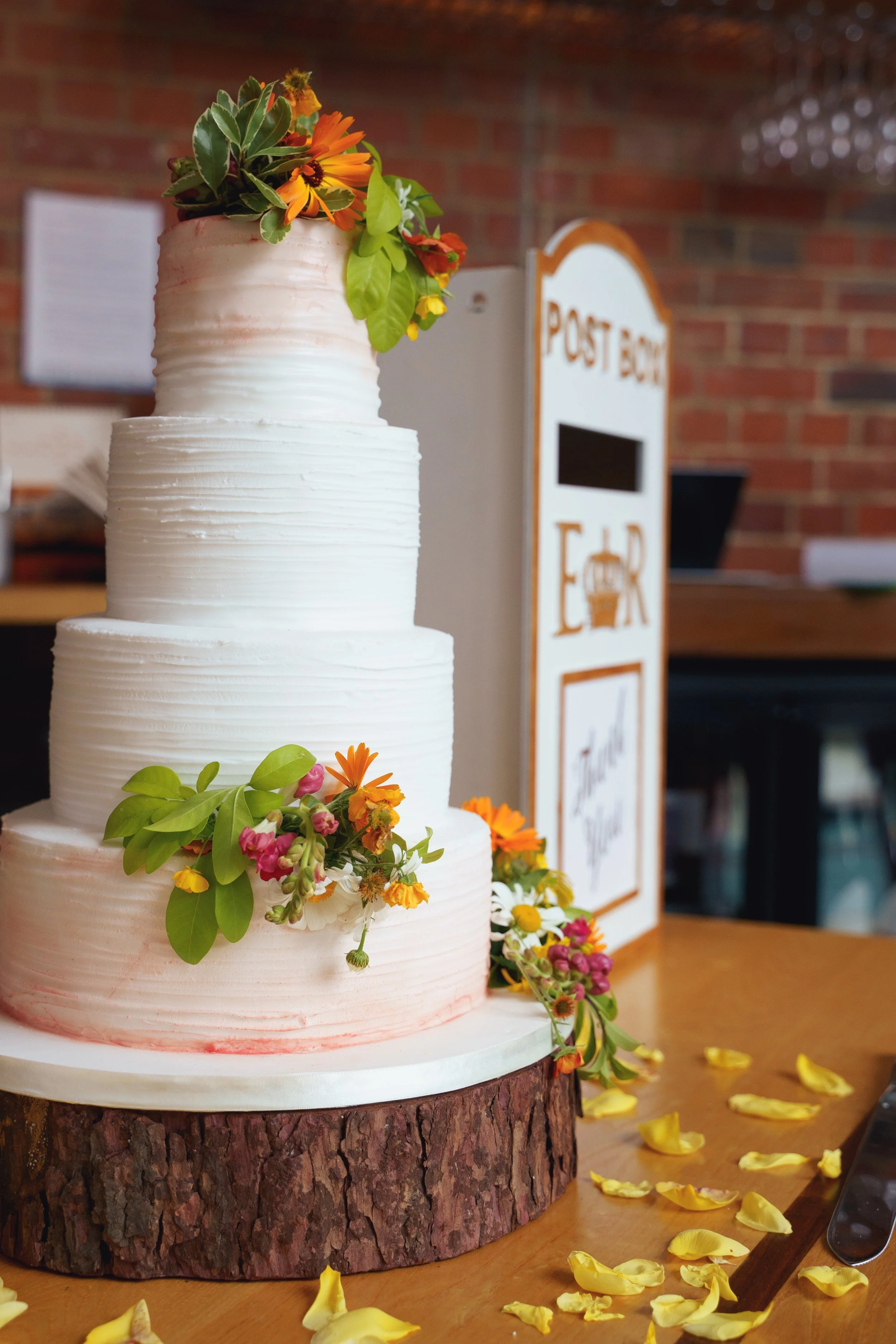
What makes our flowers sustainable?
Well, it starts with the soil. Part of regenerative farming focuses on looking after the soil. This doesn’t just mean the brown stuff in between my fingers whilst I plant my new Phlox plants, it’s about the life in this soil, including fungi and micro-organisms. This is what makes soil healthy and is the reason we have chosen to invest heavily this year in creating no-dig beds.
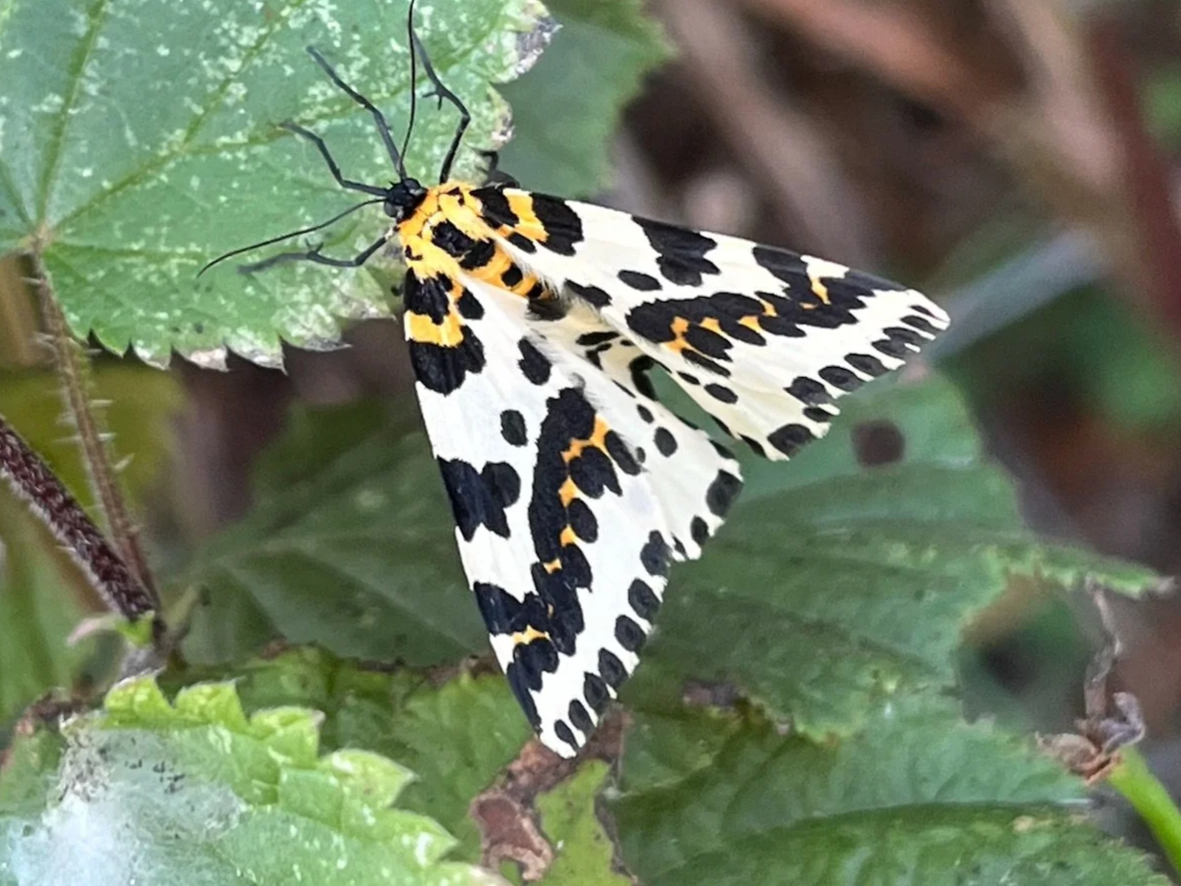
Magpie moth in the hedgerow
No-dig beds are created by mulching the surface of the ground with organic matter. We have chosen to do this at first by laying plain, brown cardboard on the grass, soaking it and then applying a three inch mulch of compost. The compost and cardboard will block out the light and eventually kill off the grass underneath. We can then plant straight into the beds. As we progress, we will top up these no-dig beds with our own compost in future years. It is our intention that any organic matter (stems, grass, branches) from the farm stay on the farm to create compost or dead headging and log piles.
No-dig beds are great because they feed the organisms already living in the soil, replenish soil fertility, help to improve soil structure (leading to less waterlogging) and store more carbon. Every time soil is distrubed or dug, carbon is released into the atmosphere. By digging only minimally, when absolutely necessary, we are avoiding this.
As well as growing our flowers and foliage in no-dig beds, we capture rain water. We are off grid, which means we do not have access to electricity or mains water.
This makes us think more about what resources we are using and reduces our carbon footprint. Last summer we constructed a roof from which we collect rain water into two 1000l IBC tanks. We are planning on increasing the number of tanks we have this year. Plants much prefer rain water to mains water and so this is a win-win situation.
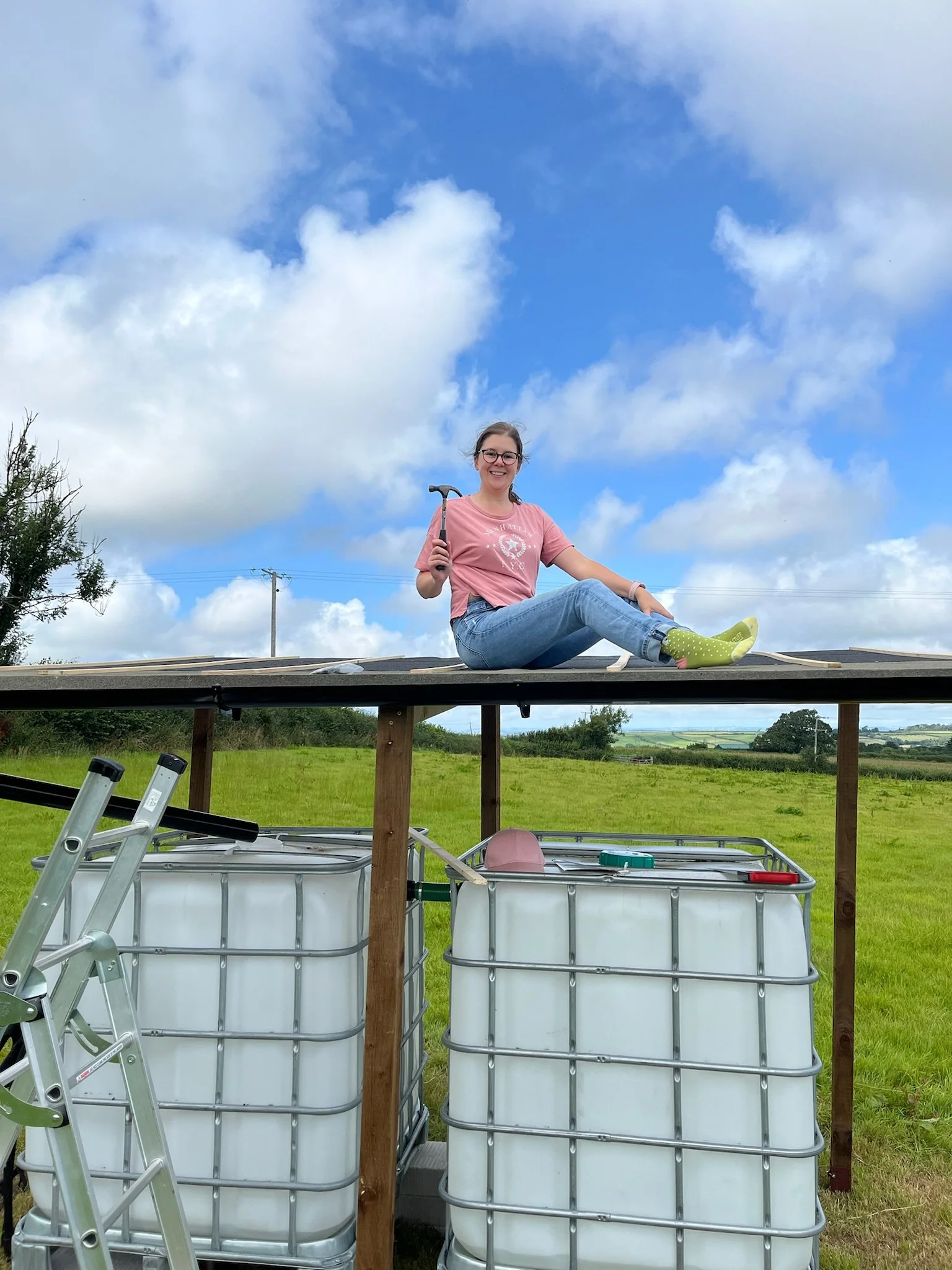
Alice proud of her new water capture area
Finally, we grow our flowers and foliage chemical free. We do not use any pesticides, synthetic fertilisers or herbicides. We encourage natural predators including birds, ladybirds and lacewings amongst others. We leave the aphids on the roses because we know they are food for wrens and ladybird larvae. There may be short term caterpillar infestations, but they will disappear when the blue tits feed their young. By growing without chemicals we are protecting the health of the wildife in our area, of our customers (no breathing in nasty chemcials when you sniff our beautifully scented roses, sweet peas and peonies) as well as our own health. This means that we need to grow more than what we can sell because we accept that some of our flowers will be left to nature, but we’re good with that. By supporting us in buying your flowers locally and sustainably you can be sure you too are having a positive impact on your environment.
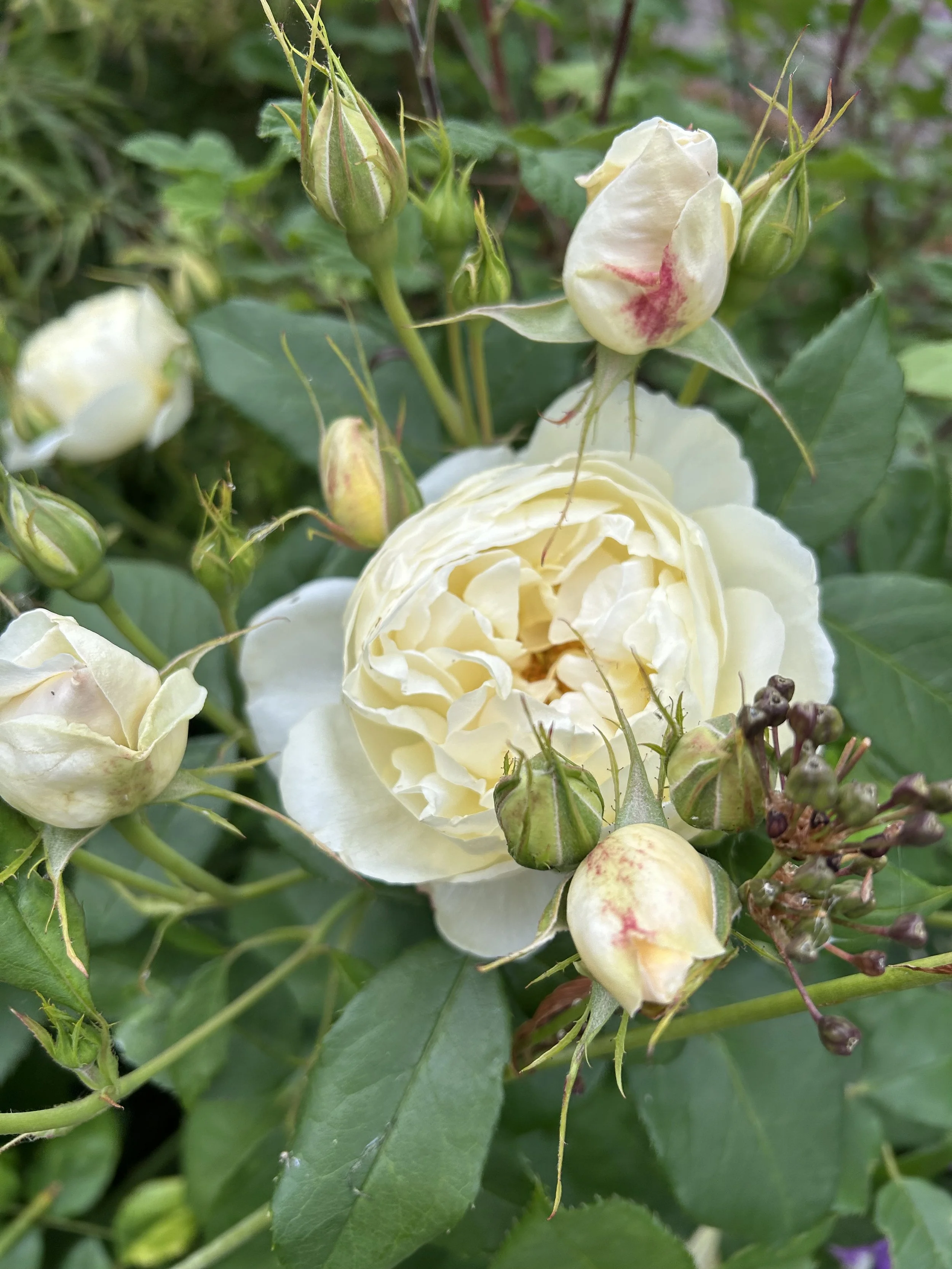
Rose Vanessa Bell
Plant Profile: Sweet Peas
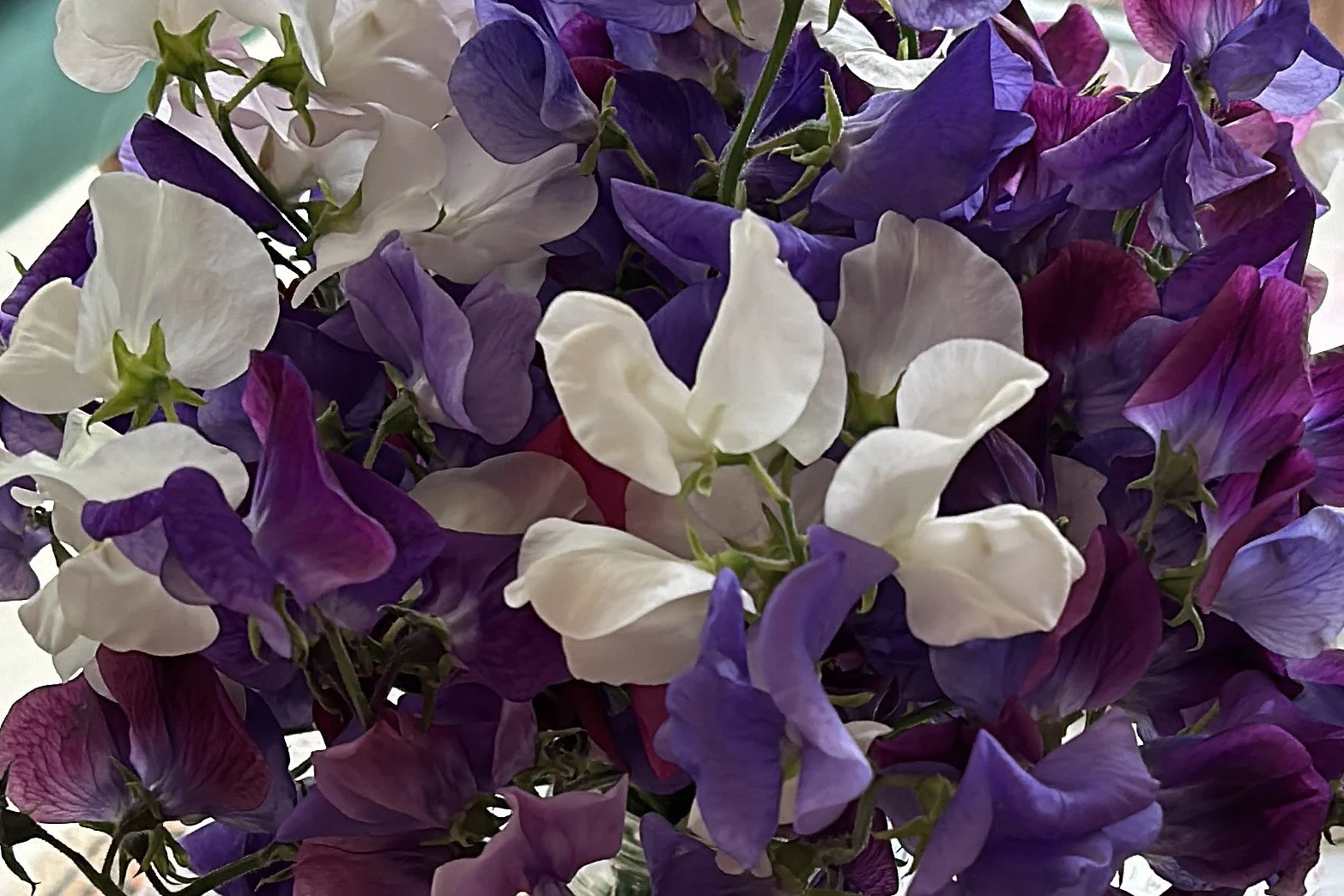
Beautiful bunch of Sweet Peas
Something new…. a blog post each month dedicated to a different cut flower. This month: Sweet Peas!
Sweet peas, or in Latin Lathyrus odoratus, are the quintessential cottage garden flower. They are evocative of summers spent with grandparents picking the delicate blooms and they are one of my favourite flowers to grow.
Sweet peas are in the pea family unsurprisingly, however they are not edible. Their flowers and seeds should not be eaten as they are toxic; best not placed on your wedding cake. However, they are beautiful in small bud vases in mid summer and they can really fill a space with their stunning fragrance.
They are hardy annuals and so need to be grown from seed, fresh each year. We sow a batch in autumn and a batch in late winter. This allows us to have a longer stretch of their pretty flowers.
They come in a selection of colours from purple, pinks, red and white, but not quite yellow or true blue, although there are some lilacs which come close.
Some are more scented than others and this is dependant on variety. Old fashioned or Grandiflora varieties are best for the most intense fragrance and we have grown varities specifically for this purpose. But we also grow Spencer Types for their extra long stem length, making them better suited for bouquets.
To keep sweet peas flowering, you need to keep deadheading. Sometimes this means going out twice a day to remove the spent blooms. But they will keep repaying you, with more beauty and fragrance.
It’s not too late to sow some seeds if you have some tall pots and good quality compost. Sweet peas are hardy and don’t need heat to germinate. We don’t bother soaking our seeds either. You could be picking handfuls of flowers come June if you get some seed in compost now.
Alternatively get in touch with us and we can provide your event this summer with beauty and fragrance from our Devon grown Sweet Peas.
One month in
Native woodland creation at Berry Cross Flowers in North Devon
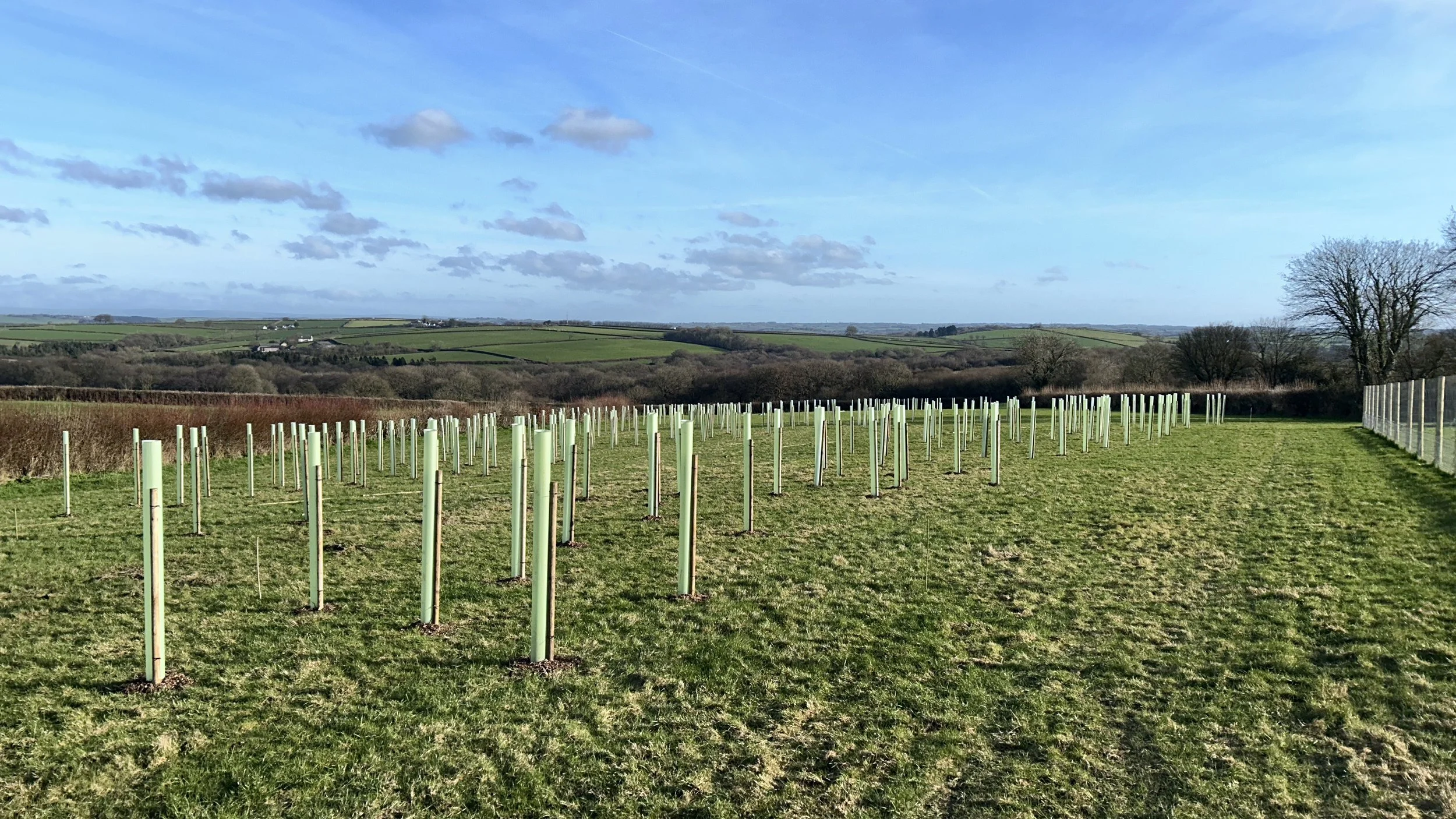
The main block of woodland on the north side of the flower field
So, here we are. One month in to 2026. So far it has been extremely busy on our North Devon flower farm. We have planted 700 trees in the woodland areas and 60 sub-shrubs. We still have 140 to go. These trees along with their stakes and guards were partially funded by The Woodland Trust, which has been amazing. It has allowed us to plant up huge swathes of the field with native, broadleaf trees. We hope that the species included will be resiliant in our ever changing climate. We have planted oak (English and Sessile), willow, alder, birch (downy and common) as well as hornbeam and wild cherry. We have dog rose, elder, hazel, blackthorn and hawthorn shrubs also planted. It feels so good to think about what it will be like in 100 years - hopefully full of wildlife.
We have also planted our orchard and crab apples along with quite a bit of native hedging.
For the orchard we tried to choose lesser known varieties but also trees which are more adaptable to our wet winters and exposed location. We sourced our fruit trees from Adam’s Apples who are an organic tree nursery based outside of Cullumpton, Devon. We have cooking, dessert, juicing apples as well as pears, plum, greengage, damson, cherries and mazzards. We also planted one quince tree and one medlar.
The plan will be to offer an “adopt a tree” programme in a few years, where customers can adopt a fruit tree for a year, attend a pruning workshop and then collect any fruit when they are ready to harvest. Keep your eyes peeled for more news on this.
Next week I am meeting a specicalist from Devon Wildlife Trust to discuss creating a meadow on the lower section of our farm. I am looking forward to seeing what this place will look like by the end of the summer.
We are busy sowing the beginnings of our seeds and ordering dahlia tubers as well as shrubs for cutting this summer. Make sure you’ve signed up for all the latest news and offers.
We are still able to produce bouquets using British grown flowers, even in the depths of winter. Just phone us to discuss your needs and we would be happy to help.
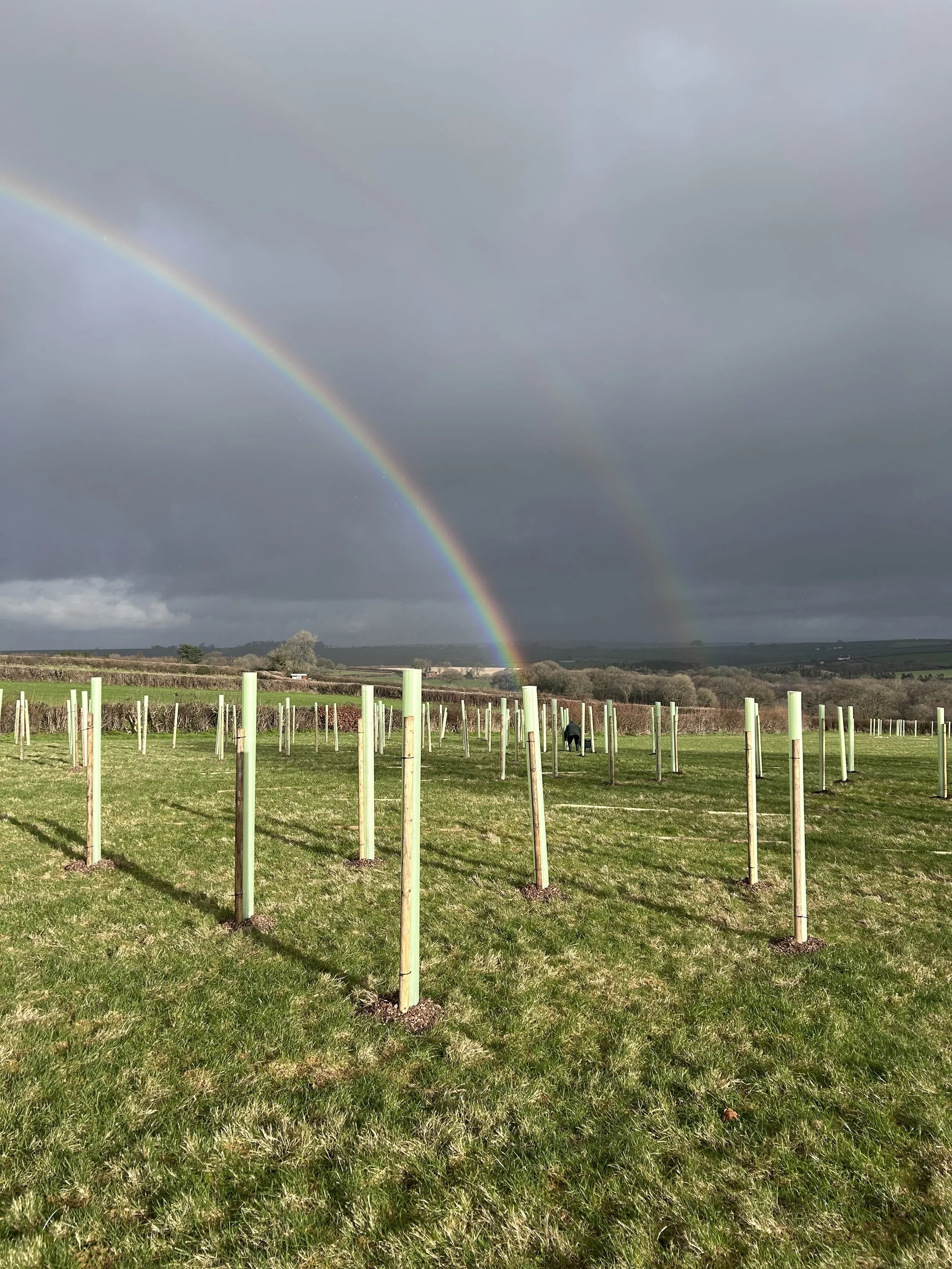
Double rainbow
The Tuesday Flower Club: July edition
As we spend more time outside in the evenings. This month’s club members will create a ribbon of flowers for their outside dinging area which can easily be transported inside and dotted around the house for colour and scent in every room.
We will need three small vases or jam jars for this month’s arrangement.
Sweet peas are the star of the show this month, before they start to go over toward August.
#berrycrossflowers #northdevon #sustainableflowers #weddingflowers #subscriptionflowers #cutflowers #britishgrown #britishflowers
The Tuesday Flower Club: June edition
In the third Tuesday Flower Club of the season we will be creating a flower crown for the festival season.
This month’s arrangement can be used as a floaty, delicate flower crown, but also as a summer door wreath or table centre piece.
This month’s flowers and foliage include more roses, buttercups and variegated foliage.
Please remember to send us your photos or tag us in your social media pages.
#berrycrossflowers #northdevon #sustainableflowers #weddingflowers #subscriptionflowers #cutflowers #britishgrown #britishflowers
The Tuesday Flower Club: May edition
We’re fast approaching May and the Tuesday Flower Club will receive their second instalment this week (if they joined in April).
Along with absolutely gorgeous, beautifully scented British flowers and foliage, club members will receive information on how to arrange them this month.
May traditionally marks wedding season and so this month we will be creating a bridesmaid hand tie bouquet. Of course, this can be placed in a vase and enjoyed whether you’re a bridesmaid or not.
This month you can expect fresh green foliage, the start of the roses and bold standing alliums.
#berrycrossflowers #northdevon #sustainableflowers #weddingflowers #subscriptionflowers #cutflowers #britishgrown #britishflowers
Floral mechanics
You may have heard of floral foam, or sometimes known as Oasis, but have you heard of it’s health risks and associated environmental issues?
I don’t use floral foam in my floristry. I want you to be able to compost the flowers once they have faded and know that no chemicals are being fed back into your soil.
Floral foam contains a wealth of nasty chemicals including formaldehyde and sulphur dioxide as well as being made of plastic. It has been associated with health risks including cancer and infertility. It is really a very unpleasant material.
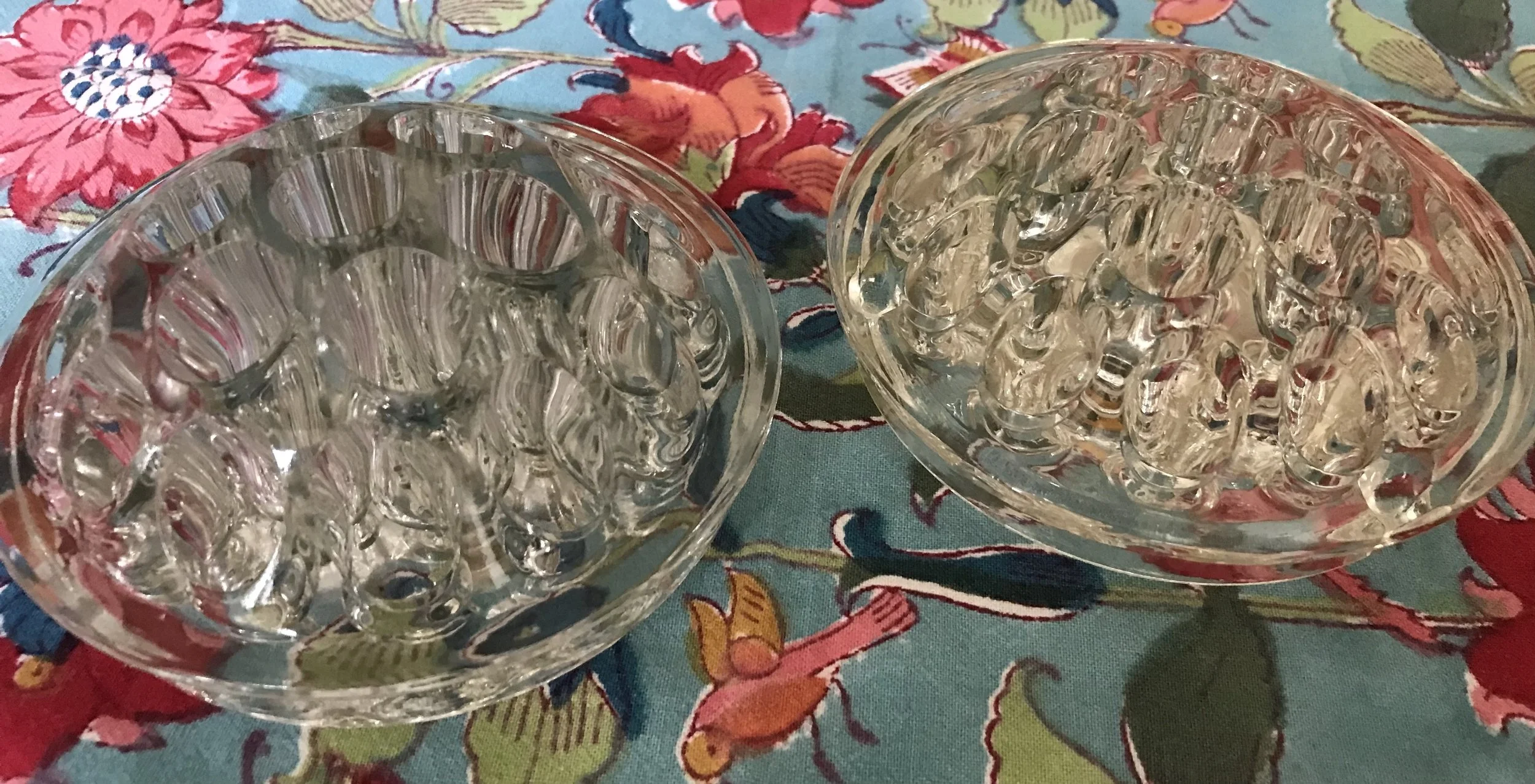
In my more open floral arrangements where the structure of floral foam may have been used in the past, I use floral frogs made from glass or sometimes chicken wire. These items can be reused time and time again and pose no health risks to the florist or receiver of the flowers.
We take sustainability and environmental issues very seriously and are proud of the fact that our flowers don’t cost the Earth.
#berrycrossflowers #northdevon #sustainableflowers #weddingflowers #subscriptionflowers #cutflowers #britishgrown #britishflowers
Let me introduce myself
My name is Alice and I love flowers. I love growing them, I love arranging them and I love sharing them.
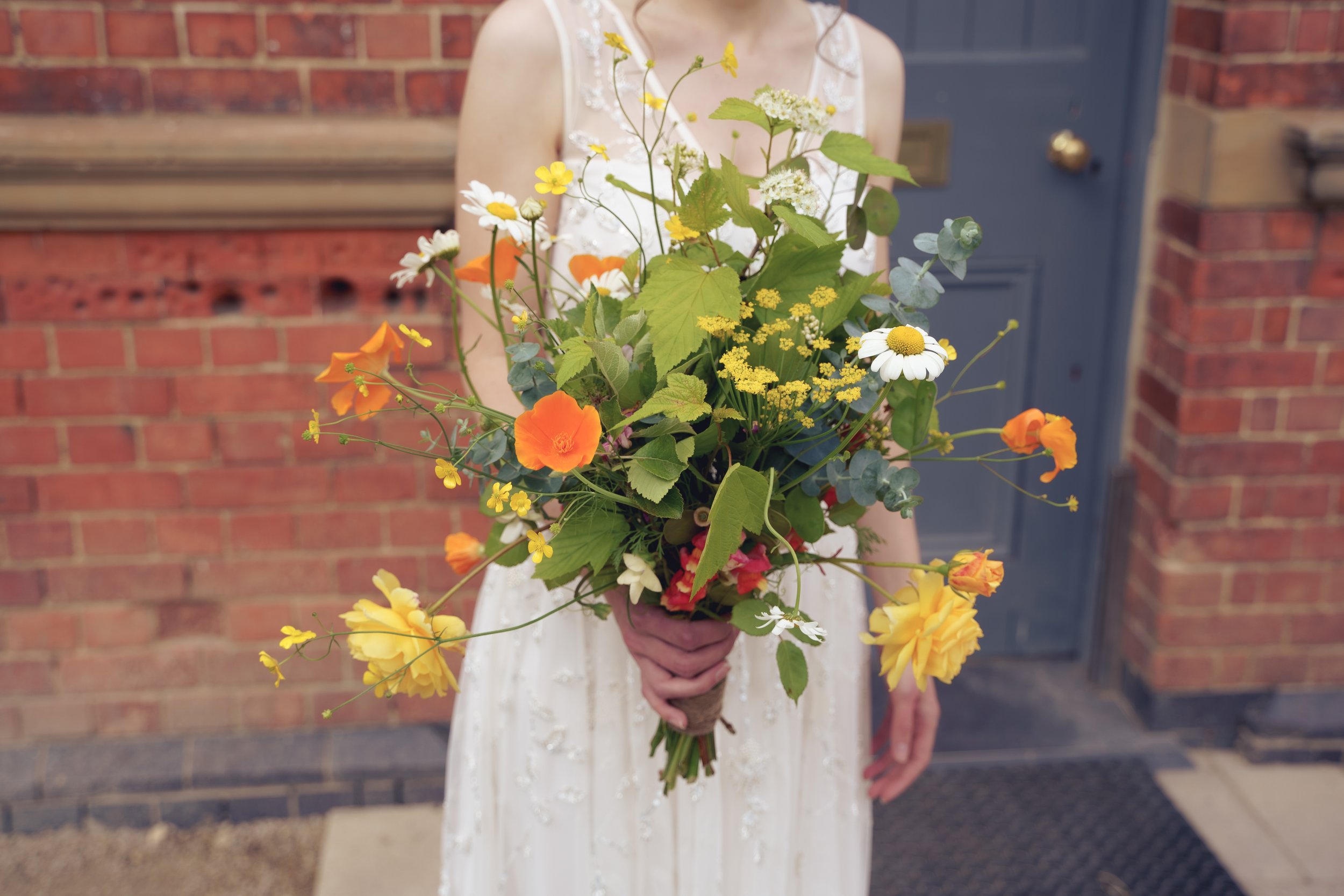
In 2022 I grew the flowers for my sister’s wedding. It was a June wedding and the colours wanted were yellow, orange and green.
I was tasked with producing a brides bouquet, button holes, jam jar posies and flowers for arranging around the cake.
I had a wonderful time growing flowers for this special occasion and I realised that this was something I was not only good at, but really enjoyed.
Since then I have been growing bouquets for friends and posies for subscribers.
I have a strong desire to give something back to nature, and never take anything away from it. I grow organically and so never use chemicals in my garden. I do not use peat or animal products either. The flowers I grow are grown for scent as well as beauty, with roses and peonies being a firm favourite.
I am excited to start this new venture and share my love of everything floral with local customers.
#berrycrossflowers #northdevon #sustainableflowers #weddingflowers #subscriptionflowers #cutflowers #britishgrown #britishflowers